
The best investment tracking app depends on what you need to see. For net worth across every account, Empower Personal Dashboard (free) or Kubera. For dividend, performance and tax reporting, Sharesight. For research-driven portfolio analysis, Stock Rover, Morningstar Investor or Seeking Alpha Premium. For news alongside your holdings, Yahoo Finance. For mixed stock and crypto portfolios on mobile, Delta Investment Tracker. For detailed desktop records and cost basis, Quicken Classic. Active traders who need to review individual executions, rather than holdings, need a trading journal instead.
Keeping a close eye on your investments is more than just checking balances; it’s about understanding performance, identifying hidden fees, and staying disciplined through market ups and downs. Many investors start with a simple spreadsheet, but as portfolios grow in complexity, this manual approach becomes a frustrating time sink prone to errors. This is where the best investment tracking apps come in, automating the heavy lifting to provide a clear, consolidated view of your entire financial picture.
For active traders and long-term investors, the challenge isn’t just tracking numbers; it’s managing the emotional rollercoaster that comes with market volatility. A truly effective tool helps you step back from the daily noise, analyze your decisions based on hard data, and stick to your long-term strategy without making impulsive moves. It’s about building a process that protects you from your own worst instincts during a market panic. This guide cuts through the marketing hype to provide an in-depth, honest look at the top platforms available today.
Below, each app is reviewed on features, pricing and the investor it suits best, followed by a side-by-side comparison table and a short guide to choosing.
1. Empower Personal Dashboard: Best for Holistic Wealth Management
Empower Personal Dashboard, formerly Personal Capital, offers one of the most comprehensive free suites of tools available, making it a top contender among the best investment tracking apps for those seeking a complete financial overview. It excels at aggregating all your financial accounts, from brokerages and 401(k)s to bank accounts and mortgages, to give you a real-time, 360-degree view of your net worth.
The platform’s strength lies in its long-term planning tools. For instance, the ‘Retirement Planner’ runs what are called Monte Carlo simulations—a sophisticated way to model thousands of possible market outcomes—to forecast the likelihood of your portfolio’s success, encouraging a disciplined, goal-oriented mindset. A standout feature is the ‘Investment Checkup’ tool. It can analyze your holdings across all connected accounts and reveal hidden risks. For example, it might discover you’re too heavily invested in one company because you hold its stock directly in a brokerage account and also indirectly through two different mutual funds. This powerful insight can help you journal stock trades in one place.
While the free tools are robust, be prepared for periodic marketing prompts for Empower’s paid advisory services. This is their business model, so it’s a trade-off for the powerful free dashboard.
- Pros: Powerful free portfolio tools, true net worth aggregation, excellent retirement modeling.
- Cons: Frequent upselling for paid services, some advanced features are gated for advisory clients.
2. Kubera: Best for Modern Diversified Portfolios
Kubera distinguishes itself as a premier wealth tracker for the modern investor whose portfolio extends beyond traditional stocks and bonds. It’s one of the few platforms built from the ground up to seamlessly integrate everything from global equities and brokerage accounts to cryptocurrency, DeFi assets, NFTs, real estate, and even precious metals. This makes it one of the best investment tracking apps for those who need a truly unified view of a diverse and global asset base.
The platform’s privacy-first, subscription-based model means no ads and no selling of your data—a significant advantage for security-conscious users. A unique and powerful feature is its focus on estate planning. Kubera allows you to designate a beneficiary who can receive a secure handoff of your entire financial picture if you become incapacitated, providing peace of mind alongside robust portfolio tracking. This forward-thinking approach encourages a long-term, multi-generational view of wealth management, something that’s easy to overlook in the day-to-day market churn.
While Kubera is a paid-only service, its transparent pricing reflects a commitment to its users rather than advertisers.
- Pros: Exceptional support for alternative and global assets, strict privacy with no ads, innovative estate planning features.
- Cons: No free plan after the 14-day trial (Essentials is $250/year), and the Black tier at $2,500/year is costly for an individual user.
3. Sharesight: Best for Performance & Tax Reporting
Sharesight is a powerhouse for buy-and-hold investors who need meticulous, long-term performance data, making it one of the best investment tracking apps for those who prioritize accuracy. It tracks your actual returns by automatically incorporating dividends, stock splits, and other corporate actions, and reports performance using a dollar-weighted (money-weighted) return method, according to Sharesight’s help center.
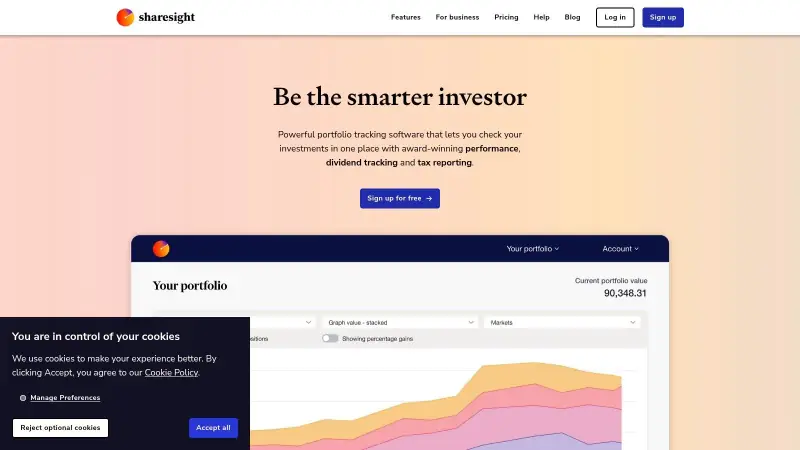
The platform’s standout strength is its tax reporting functionality, included on all paid plans (the free plan has no tax reports). Sharesight generates detailed reports for capital gains, income, and more, which can be a significant time-saver during tax season. Its ability to handle international investments and currency fluctuations is a major advantage. For example, it can calculate the impact of currency exchange on your U.S. stock holdings if your home currency is not the U.S. dollar, an often-overlooked aspect of performance. This level of detail encourages a professional, disciplined approach to managing your taxable accounts.
While its free plan is useful for getting started (one portfolio, up to 10 holdings including closed ones; paid plans from $7/month billed annually), its focus on detailed, after-the-fact reporting makes it less suitable for active traders who require real-time intraday tools.
- Pros: Accurate performance and dividend tracking, scales well for multi-portfolio users, useful free tier for up to 10 holdings.
- Cons: Less suitable for active traders needing intraday tools, some advanced tax features are region-specific.
4. Quicken Classic (Premier): Best for In-Depth Desktop Tracking
For investors who prefer the control and granularity of desktop software, Quicken Classic (Premier) remains a powerhouse and a top choice among the best investment tracking apps. As a long-standing leader in personal finance, it offers incredibly detailed, transaction-level tracking that goes beyond what most web-based aggregators provide. This is software built for meticulous record-keeping, allowing you to manage everything from individual stock lots and cost basis calculations to complex bond amortization right from your local machine.
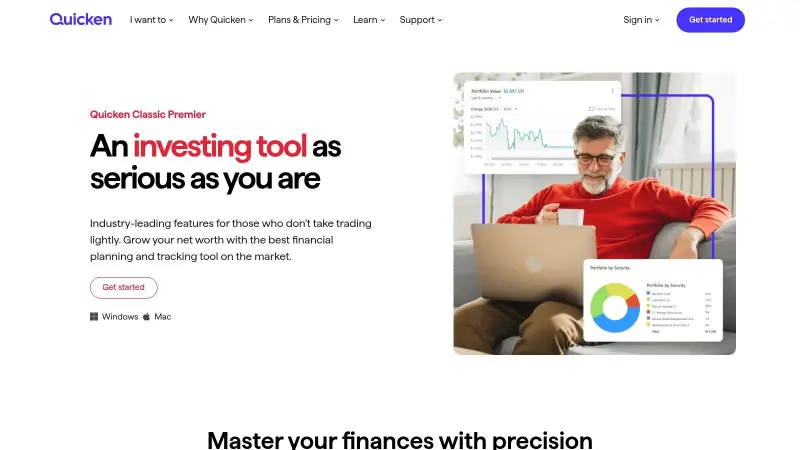
Its strength lies in its powerful reporting engine, designed for tax planning and performance analysis. For example, you can generate detailed capital gains reports to identify specific lots of a stock to sell, helping you execute tax-loss harvesting strategies with precision. While it offers a companion mobile app for convenience, its core identity is a desktop application where your data stays local. This local-first approach provides a sense of security and reliability, especially for investors who are wary of storing all their financial data exclusively in the cloud. Access requires an annual subscription (Classic Premier is $7.99/month billed annually), which is a key consideration for new users.
- Pros: Deep, accountant-friendly data and reporting tools, reliable offline access with local file control, longstanding U.S. user base and support.
- Cons: Desktop-centric with a steeper learning curve, subscription required; some features are limited to the Windows version.
5. Morningstar Investor: Best for Research-Driven Portfolio Analysis
For investors who prioritize deep, fundamentals-based research alongside portfolio tracking, Morningstar Investor is an industry standard. While many platforms aggregate data, Morningstar distinguishes itself by integrating its renowned independent analyst ratings and extensive research directly into its portfolio tools. This makes it one of the best investment tracking apps for those who want to understand the why behind their portfolio’s performance, not just the what. It provides a robust framework for building and maintaining a well-researched, long-term strategy.
The platform’s signature ‘Portfolio X-Ray’ tool is a major draw. It goes beyond simple asset allocation, dissecting your combined holdings to reveal underlying sector weights, style box diversification (a grid that classifies stocks by size and value/growth characteristics), and concentrated positions you might not be aware of. For example, you might discover that three different mutual funds you own all have significant overlap in the same handful of tech stocks. This insight is crucial for true diversification and risk management, helping you avoid being over-exposed without realizing it. The service is subscription-based ($249/year or $34.95/month, with a 7-day trial), so its powerful screeners and premium analysis are behind a paywall.
- Pros: Trusted brand with strong fund and ETF analytics, robust portfolio diagnostics and research capabilities.
- Cons: Limited pure trading tools, focuses on research and tracking; membership features are paid.
6. Stock Rover: Best for In-Depth Analytics and Research
Stock Rover is a powerhouse for serious investors who want to go beyond basic portfolio tracking and dive deep into fundamental analysis. This web-based platform is one of the best investment tracking apps for those who enjoy digging into detailed metrics, screening for specific opportunities, and analyzing portfolio performance with an institutional-grade lens. It connects to your brokerage accounts to provide a comprehensive view of your holdings, allocations, and key performance indicators.
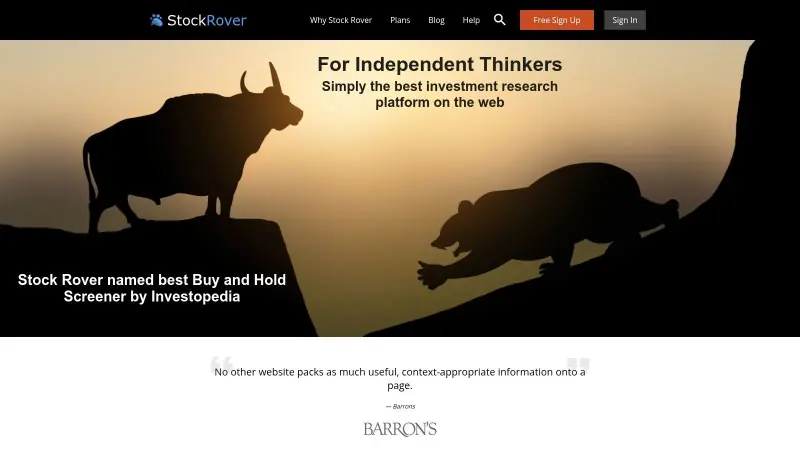
The platform’s real strength is its robust research and screening capabilities. You can screen on 800+ financial metrics on the top plans (400+ on Premium), use pre-built screeners from investment legends like Warren Buffett, or create your own complex filters. A standout feature is its portfolio rebalancing tool, which helps you maintain your target asset allocation by suggesting precise trades. For instance, if your tech stocks have outperformed and now make up 40% of your portfolio instead of your target 30%, the tool can show you exactly what to sell to get back in line. This encourages discipline over letting winners run too far. While the interface is data-rich and can feel complex for a newcomer, it offers unparalleled depth for those willing to track positions in a spreadsheet with precision. Stock Rover offers a free plan for basic research and paid tiers from Premium ($34/month) up to Ultimate Pro, offering flexibility for different needs.
- Pros: Powerful screening and analytics, excellent portfolio rebalancing tools, flexible pricing plans.
- Cons: Interface can have a steep learning curve for beginners, not a brokerage platform for executing trades.
7. Seeking Alpha Premium: Best for Ratings and Portfolio Alerts
Seeking Alpha elevates portfolio tracking by integrating it directly with a powerful research and analysis engine. While many platforms track performance, Seeking Alpha connects your portfolio’s health to a constant stream of ratings, analyst insights, and real-time news. This makes it one of the best investment tracking apps for active investors who want to understand the “why” behind their portfolio’s movements, not just the “what.” You can link brokerage accounts for automatic updates or create manual portfolios to test strategies.
The platform’s key differentiator is its proprietary rating system. Each holding in your portfolio is assigned a Quant Rating, SA Authors Rating, and Sell-Side Rating (from Wall Street analysts). Imagine receiving a push notification that a stock you own was just downgraded by analysts or that its momentum score has faltered; this integration allows you to react with informed discipline rather than emotion. Many traders struggle with holding on too long or selling too soon. This constant feedback loop encourages a proactive, data-driven approach to portfolio management instead of relying on gut feelings.
Access to these integrated tools requires a Seeking Alpha Premium subscription, so the service is geared toward serious investors.
- Pros: Strong integrated alerts and ratings tied to portfolios, extensive analyst research and community insights.
- Cons: Premium subscription required for most useful features, pricing can be a significant commitment.
8. Yahoo Finance: Best for Integrated News and Market Data
Yahoo Finance is a household name for market news, and its integrated portfolio tracker makes it a strong contender among the best investment tracking apps for those who want their holdings and market data in one place. Users can link brokerage accounts or manually input trades to build a real-time view of their portfolio’s performance. The platform’s biggest advantage is its seamless blend of tracking with comprehensive, up-to-the-minute news, earnings call transcripts, and live market quotes.
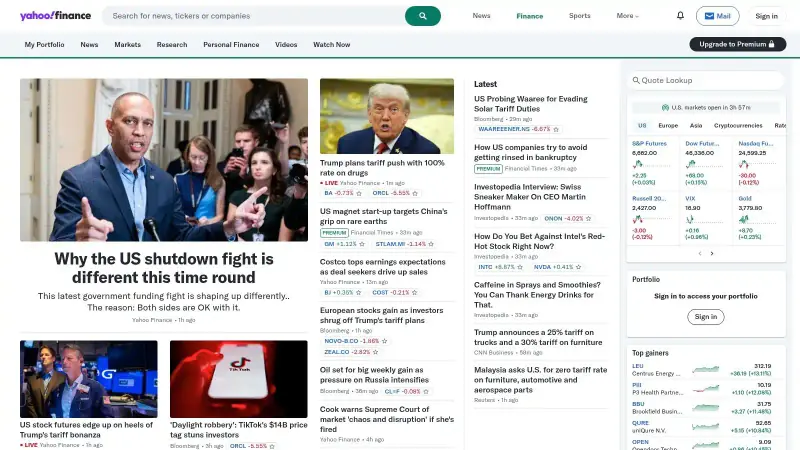
While the free version is robust for basic tracking and watchlists, the true power for active traders lies in its premium tiers: Bronze ($7.95/month), Silver ($19.95/month) and Gold ($39.95/month), billed yearly. These paid plans unlock advanced portfolio analytics, offering deeper insights into diversification, risk, and valuation metrics. For example, a Silver or Gold subscriber can see fair value estimates (what a company might be worth based on its financials) and technical analysis signals directly alongside their holdings. This helps connect day-to-day market movements with their long-term strategy, providing context rather than just raw price changes. This setup is ideal for experienced traders who want to analyze performance and market context simultaneously.
The platform is accessible and familiar, but unlocking its most powerful analytical tools requires a subscription.
- Pros: Excellent integration of news and market data, familiar user interface, strong free plan with scalable premium options.
- Cons: Most advanced analytics are behind a paywall, in-app subscriptions can complicate account management.
9. Delta Investment Tracker (by eToro)
Delta Investment Tracker, a product by eToro, is a mobile-first powerhouse that has earned its spot among the best investment tracking apps by catering to investors with diverse portfolios. It excels at tracking a wide range of assets, seamlessly pulling in data from stocks, ETFs, crypto wallets, and even commodities, presenting them in a single, intuitive interface. This multi-asset approach is ideal for the modern investor whose holdings are often spread across various platforms and asset classes.
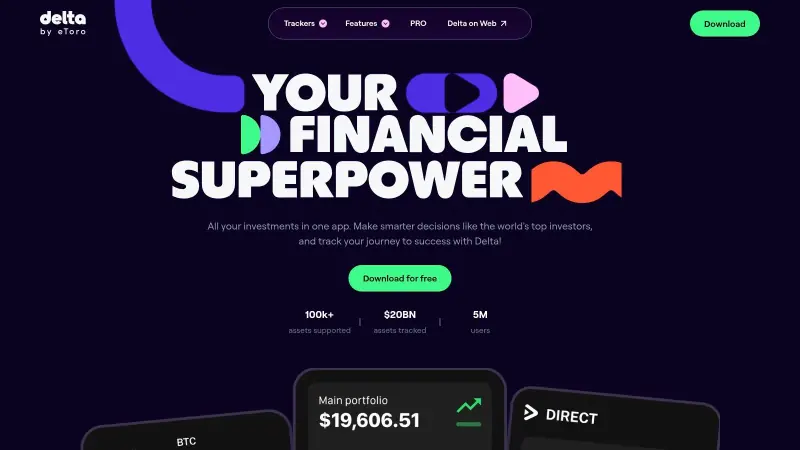
The platform’s strength is its clean, mobile-optimized design and insightful analytics tailored for active retail investors. Key features like advanced profit and loss metrics, which clearly separate realized from unrealized gains (on the PRO+ plan), help you understand the real-world performance of your decisions. For a trader, seeing that all your “realized” gains for the month came from one lucky trade, while the rest were small losses, is a critical insight for building a sustainable strategy. Every plan, including the free Basic plan, allows unlimited broker and wallet connections; the paid plans raise the number of assets you can track (10 on Basic, 40 on PRO), allowing for a truly consolidated view. This functionality is crucial for anyone who uses multiple platforms.
While the free version is functional, the PRO and PRO+ subscriptions unlock the most powerful features.
- Pros: Clean, mobile-optimized user experience, broad asset coverage including crypto and traditional investments, useful analytics designed for active retail investors.
- Cons: Pricing varies by region, and plan names/prices can differ; heavy crypto users may still require exchange-specific apps.
Investment Tracking Apps Compared
Prices and plan limits in this guide were checked on 13 October 2026 on each vendor’s site; they change often, so confirm before you subscribe. The table compares the nine apps — plus TradeReview, our own trading journal, for active traders — on features, experience, pricing, target user and what sets each apart.
| Product | Core Features/Analytics | User Experience/Quality | Value & Pricing | Target Audience | Unique Selling Points |
|---|---|---|---|---|---|
| TradeReview (our product) | Trade-level journal: logging, tags, performance analytics, calendar, broker import | Built for active traders, not buy-and-hold | Free plan; paid plans from $9.90/mo | Stock, options, futures and forex traders reviewing executions | Per-setup stats and review workflow rather than net-worth tracking |
| Empower Personal Dashboard | Multi-account linking, retirement planner, fee analyzer | Clean dashboard, strong portfolio tools | Free with optional advisory | Investors wanting net-worth + retirement planning | Broad account coverage, fee transparency |
| Kubera | Aggregates global assets incl. crypto, NFTs; estate tools | Privacy focused, no ads | Paid subscription tiers | Wealth holders with diverse assets | Estate transfer tools, multi-currency support |
| Sharesight | Auto broker import, dividend tracking, tax reports on paid plans | Reliable for long-term tracking | Free (10 holdings) + paid from $7/mo | Buy-and-hold investors, long-term holders | Tax reports, hundreds of broker integrations |
| Quicken Classic (Premier) | Transaction-level tracking, tax reporting, offline access | Deep data, desktop-based | Subscription required | Advanced U.S. investors & accountants | Local data control, detailed tax planning |
| Morningstar Investor | Research, portfolio diagnostics, screeners, education | Trusted brand, robust analytics | Subscription-based | Fundamental investors, research-driven | Extensive research & ratings |
| Stock Rover | Advanced portfolio analytics, screening, rebalancing | Strong analytics, paid tiers | Free plan + paid tiers from $34/mo | U.S. investors seeking factor analysis | In-depth research, flexible pricing |
| Seeking Alpha (Premium) | Broker linking, ratings, alerts, screeners | Research-heavy, premium subscription | Premium subscription required | Investors needing integrated alerts & research | Real-time alerts & portfolio health scoring |
| Yahoo Finance (Free to Gold tiers) | Portfolio tracking, real-time quotes, premium analytics | User-friendly web & mobile | Free + scaled paid tiers | General investors wanting scalable features | Wide market data, multiple premium tiers |
| Delta Investment Tracker (by eToro) | Multi-asset tracking, real-time quotes, alerts | Mobile-first, clean UI | Freemium with paid plans | Active retail investors with mixed assets | Multi-broker connections, crypto included |
Choosing Your Co-Pilot: Final Thoughts on Data-Driven Discipline
Navigating the markets without the right data is like flying blind. Throughout this guide, we’ve explored nine of the best investment tracking apps, each designed to illuminate a different part of your financial journey. From the net-worth dashboard of Empower Personal Dashboard to the research depth of Stock Rover, the central theme remains the same: clarity breeds discipline.
The goal isn’t merely to watch your numbers go up or down. It’s about transforming raw data into actionable intelligence. It’s about understanding the why behind your performance, identifying patterns in your behavior, and building a system that reinforces your strategy, especially when emotions run high during inevitable market downturns.
How to Choose Your Ideal App
Your choice should be a direct reflection of your primary investing challenge. Don’t get distracted by a long list of features you’ll never use. Instead, focus on the core problem you need to solve.
- For Holistic Wealth Tracking: If your main goal is to see every account-from your 401(k) and brokerage to your bank accounts and real estate-in one place for net worth tracking and retirement planning, Empower or Kubera are your top contenders.
- For Performance and Tax Reporting: For buy-and-hold investors who need meticulous tracking of dividends, corporate actions, and capital gains for tax purposes, Sharesight offers unparalleled, automated reporting.
- For In-Depth Trade Analysis: If you are an active trader struggling to identify strengths, weaknesses, and costly habits—like consistently selling winners too early—a dedicated trading journal and analytics platform like TradeReview is purpose-built to provide the insights you need.
- For Fundamental Research & Discovery: Investors who prioritize deep fundamental analysis, stock screening, and uncovering new opportunities will find immense value in platforms like Stock Rover, Seeking Alpha, or Morningstar Investor.
Implementation is Everything
Remember, the most powerful app is useless if it isn’t integrated into your routine. The true value of these tools emerges not from a single glance, but from consistent use over time. Commit to a weekly or monthly review of your portfolio’s performance, your trading habits, and your progress toward your long-term goals.
These platforms are not magic wands that offer guaranteed profits. They are sophisticated instruments designed to help you execute your strategy with greater precision and emotional control. The market will always be unpredictable, but your process doesn’t have to be. By choosing one of the best investment tracking apps that aligns with your specific needs, you are not just buying a tool; you are investing in a system for disciplined, data-driven decision-making. Your commitment to that system will be the ultimate driver of your long-term success.
Related reading
- Stocks trading journal — log active stock trades, not just holdings
- Calculating trading profit — active trading P&L vs portfolio view
- Best trading journal — journals for execution, not just holdings
Start journaling with TradeReview for free — execution analytics for active traders.